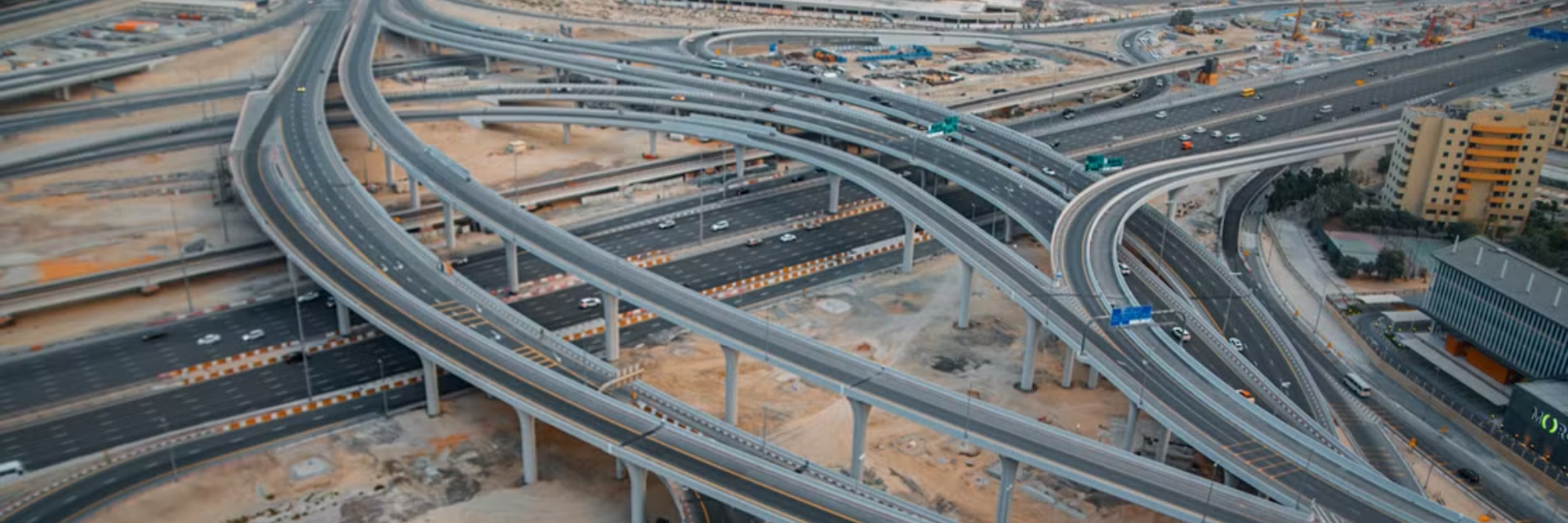
Emirates Road: Major Highways in the UAE You Should Know About
The Emirates Road stands as a testament to the incredible growth of the United Arab Emirates. For anyone living in or visiting this country, understanding the major highways is essential for navigating the different emirates with ease. These roads are the lifeblood of the nation, linking Dubai to the capital and stretching all the way to the UAE's northern border. Whether you are a daily commuter or a weekend explorer, the traffic efficiency provided by these massive arteries makes travel a breeze.
In the UAE, highways do more than just move cars; they connect major cities, support massive developments in Dubai International City, and provide direct access to world-famous landmarks. From the high-rise buildings of Downtown Dubai to the quiet rural roads of the eastern region, the highway system ensures seamless inter-emirate connectivity. At MOOV By Al-Futtaim, we want you to feel confident behind the wheel, which is why we’ve put together this guide to the most important roads you’ll encounter.
Understanding UAE Highway Naming (E-Road System)
Navigating the United Arab Emirates is made simpler by the "E" numbering system. Every major road that connects different emirates is assigned an "E" prefix followed by a number. Generally, these main highways run parallel to the coast or cut across the desert to link the coast with the interior.
The E11 road name, for instance, represents the longest and most famous arterial highway in the country. Understanding these numbers helps you distinguish between intra-city roads and the major highways that facilitate long-distance travel. While Dubai has many main roads, like Hessa Street or Airport Road, the E-roads are what you will use to travel between Abu Dhabi, Sharjah, Umm Al Quwain, and Ras Al Khaimah.
Emirates Road (E611): One of the UAE’s Most Important Highways
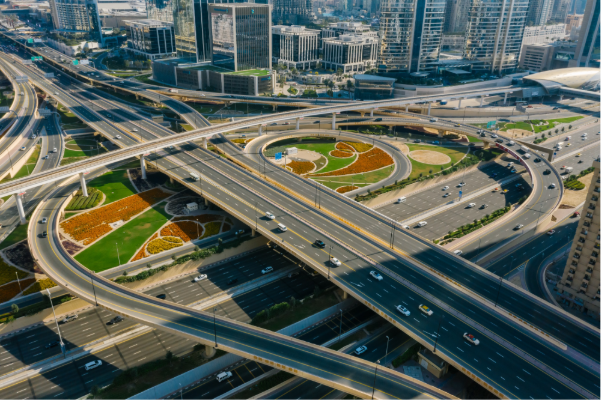
Emirates Road (E611) is a vital route for those looking to bypass the city's central congestion. Previously, Dubai bypass road was renamed to Emirates Road to reflect its growing importance. Stretching approximately 110 km, the highway serves as a key transport corridor linking several emirates. This Dubai highway runs parallel to the coast, sitting further inland than the E11 and E311.
The E611 road name is often associated with heavy vehicles and long-haul logistics, as it provides a clear path for trucks moving between the northern emirates and Abu Dhabi without entering the heart of Dubai. For residents in suburban areas like Al Khawaneej or those near Dubai Silicon Oasis, the Emirates Road offers a faster alternative during peak hours.
It is a wide, modern major road that has significantly improved traffic efficiency across the region. The route also provides convenient access to several destinations, including the Dubai Autodrome, making it useful for both commuters and leisure travellers. It is also frequently referred to as the Emirates Bypass Road by long-time residents.
Other Major Highways in the UAE You Should Know About
While the Emirates Road is a key player, several other major highways form the backbone of the UAE’s transportation network. Each offers a unique driving experience and connects prominent locations.
E11 – Sheikh Zayed Road
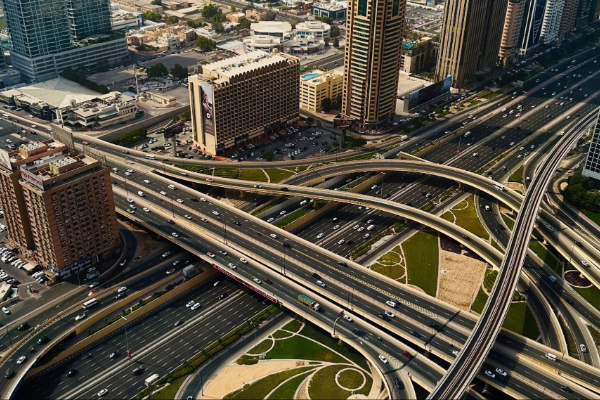
The E11 road name is legendary. In Dubai, it is known as Sheikh Zayed Road, but as it passes through other emirates, the name changes. In Abu Dhabi, it is called Sheikh Maktoum Bin Rashid Road (or Maktoum Bin Rashid Road), and it eventually leads toward Al Silah near the Saudi border.
This is the most famous Dubai highway, passing by the Burj Khalifa, Dubai Mall, Trade Centre, and Business Bay. Its prime location through the heart of Dubai makes it one of the busiest and most recognizable highways in the country.
Driving along the E11 gives you a front-row seat to the stunning high-rise buildings that define the skyline. It provides direct access to Al Barsha, Bur Dubai, and the Downtown area. Despite the heavy traffic during peak hours, it remains the most efficient way to reach Dubai International Airport from the southern end of the city. It is the country's ultimate arterial highway.
E311 – Sheikh Mohammed Bin Zayed Road
Commonly referred to as the SMBZ road or simply Bin Zayed Road E311, this highway is a favourite for commuters. However, it is also known for experiencing some of the UAE's busiest traffic conditions. The E311 was called Emirates Road before the E611 took over that name. It serves as a crucial link between Dubai, Sharjah, and the northern emirates.
The E311 passes through several suburban areas and Dubai International City developments, including Arabian Ranches, Dubai Sports City, and Jumeirah Village Circle. It is a toll-free alternative to the E11, making it a popular choice for those traveling from Ras Al Khaimah or Umm Al Quwain into the city. The Hessa Street exit on the E311 is a major junction that connects drivers to Al Quoz and the coastal areas. Many people still refer to it by its older name, the Mohammed bin Zayed Road.
During weekdays, E311 experiences severe congestion from 06:30 to 09:00, particularly for commuters travelling towards Dubai. Northbound traffic on E311 often begins to slow around 16:00, as evening travel demand increases. In many cases, congestion on E311 can be heavier than on both E11 and E611 due to the large number of residential communities and business districts connected by the route.
E44 – Al Khail Road / Dubai-Hatta Road
Al Khail Road is one of the most important major roads in Dubai. It runs parallel to the E11 and E311, providing a central route through the city. As you move further east, the E44 becomes the Dubai Hatta highway, leading you toward the scenic mountains.
This road connects Business Bay with Ras Al Khor and passes near the Zabeel Royal Palace. It is a vital arterial highway for those living in Jumeirah Village Circle or working in the Downtown area. The Ras Al Khor road section is particularly important for accessing the Dubai International Airport and the Al Aweer Road industrial areas.
E66 – Dubai–Al Ain Road
The E66 road name belongs to the Dubai-Al Ain road, which was recently upgraded to improve safety and capacity. This major road connects the coastal city of Dubai with Al Ain City in the eastern region.
The Al Ain road is known for its smooth, straight stretches and is a favorite for those heading to the "Garden City" for a weekend getaway. It passes by Dubai Silicon Oasis and provides a vital link for students and professionals commuting between the two cities. The Wafi Mall junction serves as the starting point for this highway in Dubai, offering a gateway to the desert.
E77 – Sheikh Khalifa Bin Zayed Road
Not to be confused with the highway in the north, Sheikh Khalifa bin Zayed Road connects the E11 (near Jebel Ali) with the E611. It is a strategic route that provides access to the area surrounding the Al Maktoum International Airport and the Expo 2020 site. It is an essential part of the major highway network for logistics and industrial transport.
E84 – Sheikh Khalifa Highway (Dubai–Fujairah Road)
If you are looking for a scenic drive, the Sheikh Khalifa Highway is the perfect choice. It is the fastest route linking Dubai to the UAE's northernmost emirate, Fujairah. This highway cuts through the Hajar Mountains, offering breathtaking views that are a far cry from the high-rise buildings of the coast. It is a major road for tourists and residents heading to the east coast for diving and mountain trekking.
Tips for Driving Safely on UAE Highways
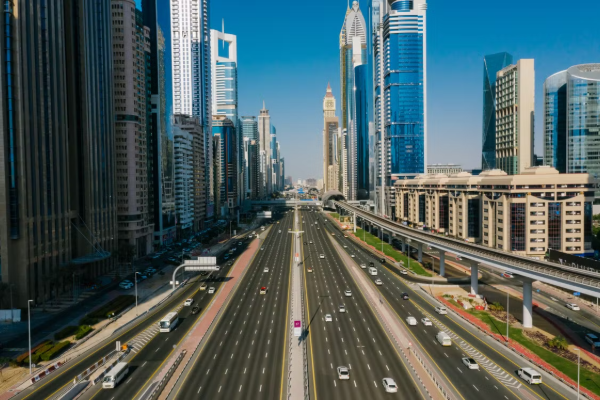
Driving on major highways in the United Arab Emirates requires focus and an understanding of local rules. Here are some practical tips:
- Respect the Speed Limit: The speed limit on main highways is usually 100 km/h to 140 km/h. Be aware of the "buffer" system; in most emirates (except Abu Dhabi), there is a 20 km/h grace period, but it is always safer to stick to the posted signs. Drivers should also be familiar with the different traffic radars and traffic cameras in Dubai that monitor highway speeds and road safety compliance.
- Stay Out of the Fast Lane: The far-left lane is for overtaking. If you are not driving at the maximum speed limit, move to the right to allow faster traffic to pass.
- Watch for Heavy Vehicles: On roads like the Emirates Road (E611), you will encounter many trucks. Give them plenty of space and avoid sudden braking in front of them.
- Plan for Peak Hours: Traffic can be heavy on the Sheikh Zayed Road and SMBZ road during the morning and evening rush. Use navigation apps to find the most efficient routes.
- Check Your Vehicle: Before heading out on long journeys across all the emirates, ensure your tires and coolant levels are checked, especially during the summer. Avoid driving on very bad road infrastructure if you spot it in rural areas, though most UAE highways are in prime condition.
Exploring the UAE Easily Through Its Highway Network
The United Arab Emirates has transformed its landscape from rural roads to world-class major highways in just a few decades. This infrastructure makes it possible to breakfast in Abu Dhabi, lunch in Dubai, and enjoy dinner in Ras Al Khaimah all in one day. The inter-emirate connectivity is truly a marvel of modern engineering.
Drivers should also keep track of any violations that may affect their driving record by understanding how to check black points on their license in Dubai, Abu Dhabi, and Sharjah.
If you want to explore these roads without the long-term commitment of owning a car, MOOV By Al-Futtaim is here to help. You can also learn more through The Complete Guide to Car Subscription to understand how car subscriptions work and their benefits for UAE drivers.
You can browse all cars in our fleet, from fuel-efficient sedans for city driving to EVs and Hybrid cars perfect for the Dubai Al Ain road. Whether you are navigating Sheikh Zayed Road or the Emirates Road, MOOV provides the flexibility and reliability you need to enjoy the drive.
FAQs
What are the three main roads in Dubai?
The three main roads in Dubai that run parallel to each other are Sheikh Zayed Road (E11), Sheikh Mohammed Bin Zayed Road (E311), and Emirates Road (E611).
Which road is 611?
The E611 is called Emirates Road. It was previously the Dubai bypass road and serves as a major route for bypassing city traffic and accommodating heavy vehicles.
What is the E11 road called?
In Dubai, the E11 is known as Sheikh Zayed Road. In Abu Dhabi, it is called Sheikh Maktoum Bin Rashid Road, and in the northern emirates, it takes on other names like Sheikh Muhammad Bin Salem Road.
What are the major roads in the UAE?
The major highways include the E11 (Sheikh Zayed Road), E311 (Sheikh Mohammed bin Zayed), E611 (Emirates Road), E66 (Dubai-Al Ain Road), and E44 (Al Khail Road). These roads provide the primary inter-emirate connectivity across the United Arab Emirates.
Is there a road that connects to Jumeirah?
Yes, Jumeirah Road runs along the coast, providing access to the beach areas, while Al Khail Road and Sheikh Zayed Road provide the main arterial access to the Jumeirah Village Circle and Al Barsha neighborhoods.
.png)